
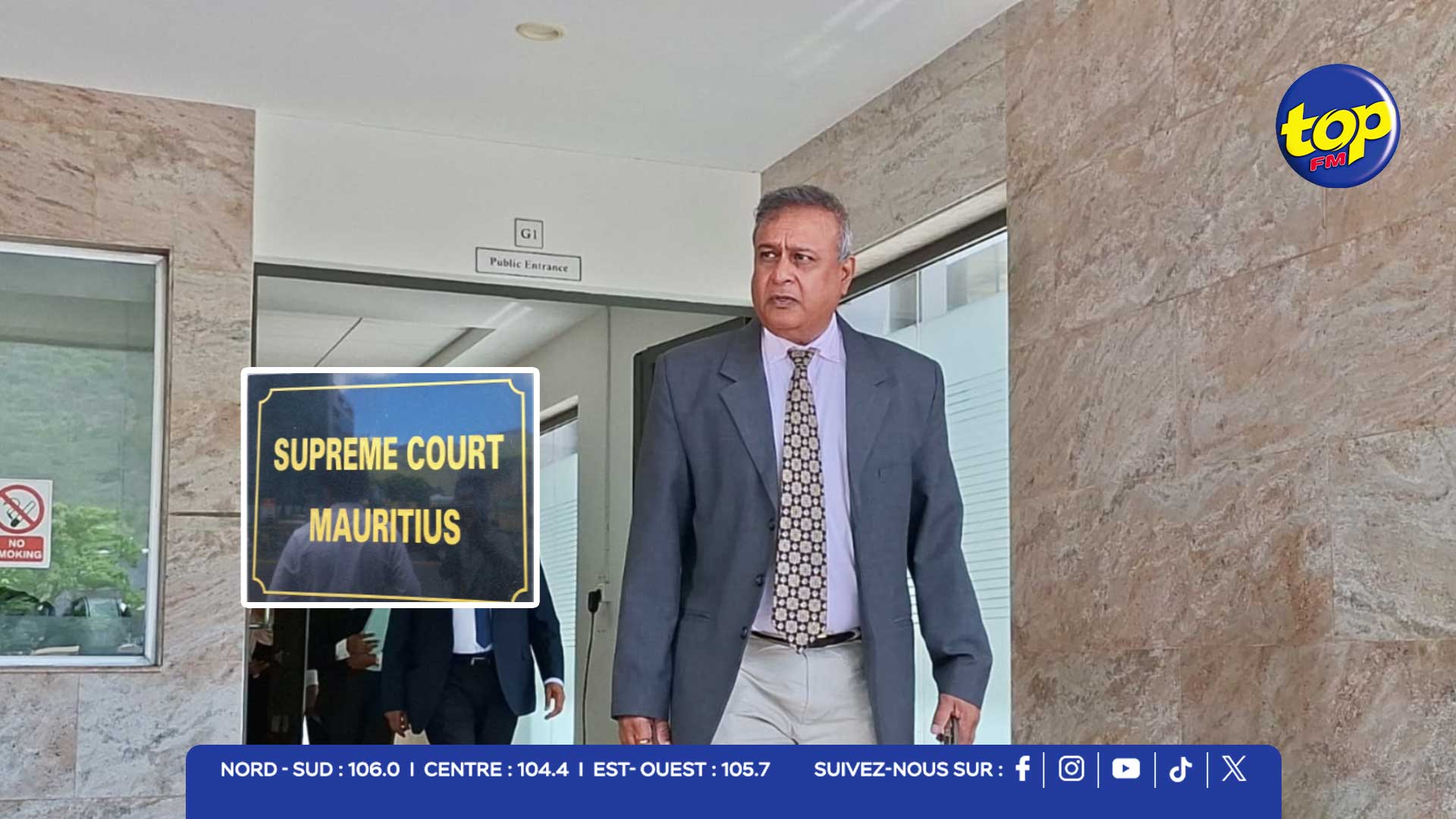
As the constitutional case TOP FM Ltd v The State of Mauritius and the Independent Broadcasting Authority was called before the Chief Justice on the morning of Monday, 19 January 2026, TOP FM announced its intention to withdraw the proceedings, following assurances from the current government that the duration of radio broadcasting licences will be reviewed.
The case, lodged by TOP FM as a constitutional redress action, arose from amendments made to the Independent Broadcasting Authority (IBA) Act in 2021, which reduced the duration of free-to-air commercial radio licences from three years to one year.
Background to the legal challenge
TOP FM initiated the constitutional action after the 2021 amendment was enacted almost on the eve of the station’s licence renewal on 12 December 2021. The radio station maintained that the change had a targeted and discriminatory effect, placing it under an annual renewal regime that undermined regulatory certainty and editorial independence.
The broadcaster argued that the timing and impact of the amendment amounted to an ad hominem measure, fundamentally altering the legal framework governing private radio at a critical moment.
Change in political context
In a letter dated 6 November 2025 addressed to the Attorney General, TOP FM formally notified the authorities of a material change in circumstances following the general elections of 10 November 2024 and the coming into office of Alliance du Changement.
In its electoral manifesto, the governing alliance committed to reviewing the IBA Act, including provisions affecting the duration of radio licences. This position echoed earlier public statements by the current Prime Minister, who had previously criticised the 2021 amendment as a liberticidal law, openly stating at the time that TopFM was the station primarily targeted.
Impact on the radio sector
Since the introduction of the one-year licence regime, TOP FM, both individually and jointly with other private radio operators, has repeatedly raised concerns with the IBA and public authorities regarding its negative consequences, including:
• serious constraints in securing bank financing and credit facilities;
• diminished attractiveness of the sector for capital investment, particularly as broadcasters face significant equipment renewal costs after more than two decades of operation;
• growing difficulties in attracting and retaining qualified personnel, due to the uncertainty created by annual licence renewals.
These concerns were formally communicated through several representations to the IBA, the Prime Minister and the Ministry of Finance.
Decision announced in court
In its correspondence to the Attorney General, TOP FM indicated that it would be prepared to withdraw the constitutional proceedings provided the government committed to reviewing the duration of radio licences within a reasonable timeframe.
On the basis of assurances received that such a review will be undertaken, TOP FM confirmed today, as the matter was called before the Chief Justice, its intention to discontinue the case.
After the Court sitting today, Balkrishna Kaunhye CEO of TOP FM stated that “The station legal action was driven by the need to protect constitutional principles, legal certainty and media freedom, and expressed its willingness to engage constructively with the authorities towards a stable and independent broadcasting framework in Mauritius”.
TOP FM was represented by Senior Counsel Me Antoine Domaingue assisted by Me Ashok Radhakissoon and Me Abdalaliyy Aumeer (Barristers) and Me Pazhany Rengasamy (Senior Attorney).
TOPFM v the State: how a 2021 law reshaped radio regulation — and why only one station went to court
Port Louis —
The constitutional case brought by TOPFM against the State of Mauritius and the Independent Broadcasting Authority (IBA) has, since its inception, gone far beyond a simple licensing dispute. At its core lay a fundamental question: can a government amend media law at the last minute, in a manner adverse to private broadcasters, without undermining freedom of expression and the rule of law?
The 2021 amendment: a decisive legal turning point
In late 2021, under the government led by Mouvement Socialiste Militant (MSM), Parliament adopted amendments to the Independent Broadcasting Authority Act that radically altered the regulatory landscape for private radios.
The most visible change was the reduction of the duration of free-to-air commercial radio licences from three years to one year. The timing proved decisive: TOPFM’s licence was due for renewal on 12 December 2021, barely days after the amendment was rushed through Parliament.
Beyond the duration itself, the amended law introduced structural constraints that significantly strengthened the IBA’s discretionary powers:
• Section 22(4) now allows the Authority, “notwithstanding any pending judicial process,” to take into account sanctions imposed on a broadcaster when deciding on licence renewal.
• Section 22(5) requires the Authority to consider the past conduct of the licensee before granting or refusing renewal.
In practical terms, this meant that even sanctions actively challenged before the courts could still be used against a broadcaster, effectively neutralising judicial safeguards and placing private radios under constant regulatory pressure.
A law adverse to private radios
Private broadcasters quickly warned that the new framework was economically and institutionally destabilising. Annual licences severely curtailed the ability of radio stations to:
• secure bank financing and long-term credit facilities;
• attract capital investment, particularly in a sector requiring continuous technological renewal;
• offer stable employment prospects to journalists, technicians and presenters.
The one-year licence regime introduced a permanent state of uncertainty — not only for TOPFM, but for the entire private radio sector.
Parliamentary debate: opposition voices raised the alarm
During parliamentary debates, members of the opposition openly questioned the intent and urgency of the amendment. Several MPs described the bill as targeted, pointing out that one identifiable radio station — TOPFM — was due for renewal within days.
In the words recorded in debate, opposition members warned that the amendment placed “a sword of Damocles” over private radios, enabling the regulator to exert pressure through annual renewals and past sanctions, even where court proceedings were pending.
They argued that the Bill was being prioritised ahead of pressing national issues, and questioned why such urgency was necessary if the reform was genuinely neutral and sector-wide.
Only TOPFM took the constitutional path
Despite widespread concern within the sector, only TOPFM chose to challenge the law before the Supreme Court through a constitutional redress action.
The station argued that the 2021 amendment:
• violated principles of legal certainty and equality before the law;
• produced a chilling effect on editorial independence;
• and amounted, in effect, to an ad hominem legislative measure, given its timing and immediate impact.
At a time when the media landscape was widely described as operating under an increasingly autocratic regulatory climate, TOPFM’s action stood out as the sole direct legal challenge to the MSM government’s media policy.
A case about press freedom, not privilege
TOPFM has consistently maintained that its legal action was not about special treatment, but about safeguarding the institutional independence of private broadcasting in Mauritius.
By taking the constitutional route, the station positioned itself as the only private radio willing to confront the State in court to test the limits of executive and regulatory power over the media.
The subsequent commitment by the new government to review the IBA Act — and TOPFM’s decision to withdraw the case in light of that assurance — has only reinforced the central lesson of the affair:
👉 Press freedom is not preserved by silence, but by challenge.