
On the morning of June 21, 2026, people across 190 countries will unroll their mats, and move together in a quiet, powerful act of collective well-being. From the ghats of Ganga to the shores of Mauritius, the 12th International Day of Yoga (IDY) will once again circle the globe. This year, yet again it carries an important message: “Yoga for Healthy Ageing.”
The story of this day begins at the United Nations General Assembly in 2014, when Prime Minister Narendra Modi proposed the establishment of an International Day of Yoga. The world responded with extraordinary unity — 177 nations co-sponsored the resolution, and it was adopted unanimously. Since then, June 21 has become one of the most widely observed days on the global wellness calendar. This year marks the 12th edition of that milestone, and the flagship celebrations in India will be held in Kolkata, West Bengal, a city steeped in spiritual consciousness and cultural heritage.
The theme chosen for IDY 2026, “Yoga for Healthy Ageing”, is not merely aspirational — it is a response to one of the defining demographic realities of our era. Across the world, life expectancy is rising. Arguably, today more people are living into their seventies, eighties and beyond than at any point in human history. But the deeper question confronting public health systems worldwide is this: are we adding years to life, or life to years?
Yoga offers a compelling answer. Through its integration of physical postures, breathing practices, meditation, and mindfulness, the discipline addresses not just the body but the mind and spirit simultaneously. It builds strength and flexibility, supports respiratory function, sharpens mental clarity, and nurtures emotional resilience. It asks for no expensive equipment, no gym membership, no special venue. And yet its benefits — when practised consistently — can last a lifetime.
The case for yoga in healthy ageing is no longer merely anecdotal. The scientific community has increasingly taken notice of this. In 2014, fewer than 200 research papers were published on the subject of yoga and healthy ageing. By 2025, that number had grown to over 1,200 publications — a sixfold increase in just over a decade. Between 2015 and 2050, the proportion of the world's population over 60 years will nearly double from 12% to 22%. Given this, the focus on yoga as a preventive and therapeutic tool for the ageing population is both timely and necessary. The challenge of ageing well cannot be met by medicine alone. Lifestyle-based, accessible, and inclusive approaches are essential — and yoga fits that description well.
In the days preceding IDY 2026, a landmark event added a new dimension to yoga's global story. Prime Minister Narendra Modi inaugurated the first-ever World Yogasana Championship in Ahmedabad, marking a historic moment in which yogasana was recognised not only as an ancient wellness practice but as a competitive sport. PM Modi expressed confidence that yogasana will one day be included in the Olympics, a prospect that underscores how far yoga has travelled from its origins in India's spiritual tradition to the centre stage of global sports.
For our growing yoga partnership too, it was an event of note. Mauritian students from MGSS Solferino and MGSS Nouvelle France participated in this competition. It is a matter of great pride that Chanda Doma won a silver medal and Dakshesh Sai Joorun won a bronze medal at the Championship.
The Government of India, through the Ministry of Ayush, is translating ‘Yoga for Healthy Ageing’ into concrete action. The Ministry has developed ten evidence-based Yoga Protocols for Non-Communicable Diseases and specific target groups. Among these is a dedicated protocol for the geriatric population — tailored to enhance flexibility, balance, respiratory function, and emotional well-being through gentle, age-appropriate practices.
Complementing this is the Yoga Samavesh initiative, which reaches out to elderly and underserved communities through chair yoga, low-impact routines, and community wellness sessions — removing the barriers of mobility, access, and resources that might otherwise keep people away from the practice. Together, these programmes reflect a vision of yoga as a public health tool: universal, inclusive, and free.
Apart from these, other initiatives such as Y-Break for corporate employees, the Common Yoga Protocol (CYP) for the general public, and therapeutic yoga protocols for disease management illustrate how yoga can support workplace well-being, daily fitness and preventive healthcare. Together, these efforts reflect the broader vision of making yoga a practical tool for improving health and balance in daily life.
For India and Mauritius, yoga is a shared heritage. This shared heritage has grown into a comprehensive partnership in health and traditional medicine. During Prime Minister Navinchandra Ramgoolam's state visit to India in September 2025, the two countries announced a Special Economic Package worth USD 680 million. A significant portion is directed towards health — covering the new Sir Seewoosagur Ramgoolam National Hospital, an AYUSH Centre of Excellence, and a Veterinary School and Animal Hospital.
The AYUSH Centre of Excellence holds particular significance. It will be the first of its kind in the region, providing Mauritians with access to Ayurvedic and traditional Indian medicine as part of a holistic approach to health that goes beyond conventional treatment. Other health milestones in the bilateral relationship include the world's first overseas Janaushadhi Kendra for affordable medicines, an ENT Hospital, a MediClinic in Grand Bois, two Area Health Centres, Renal Transplant Unit, and the Ayurvedic Garden at the State House.
Under our Joint Vision for an Enhanced Strategic Partnership, both Prime Ministers have reaffirmed their commitment to provide quality, affordable, and accessible health care benefits to the people of Mauritius. Therefore, health, in all its dimensions — modern and traditional— will continue to remain a key pillar of cooperation between India and Mauritius.
This extends to the IDY Celebration. This year, we have conducted around 26 yoga sessions in the run up to the IDY across Mauritius in schools, government organizations, private sectors, covering a diverse sector of participants. This includes a special milestone of first-ever Yoga Session in the State House with the personal participation of President H.E. Dharambeer Gokhool.
What makes yoga unique is its universality. It transcends faith, culture, borders, and age groups. And it is one of the most powerful and accessible means to healthy being!
So, on the morning of June 21, step onto the mat — even for fifteen minutes. Breathe deeply. Move mindfully. Hundreds of millions around the world will be doing the same. And Mauritius will be right there alongside them, as part of this extraordinary global movement for health, harmony, and human well-being.
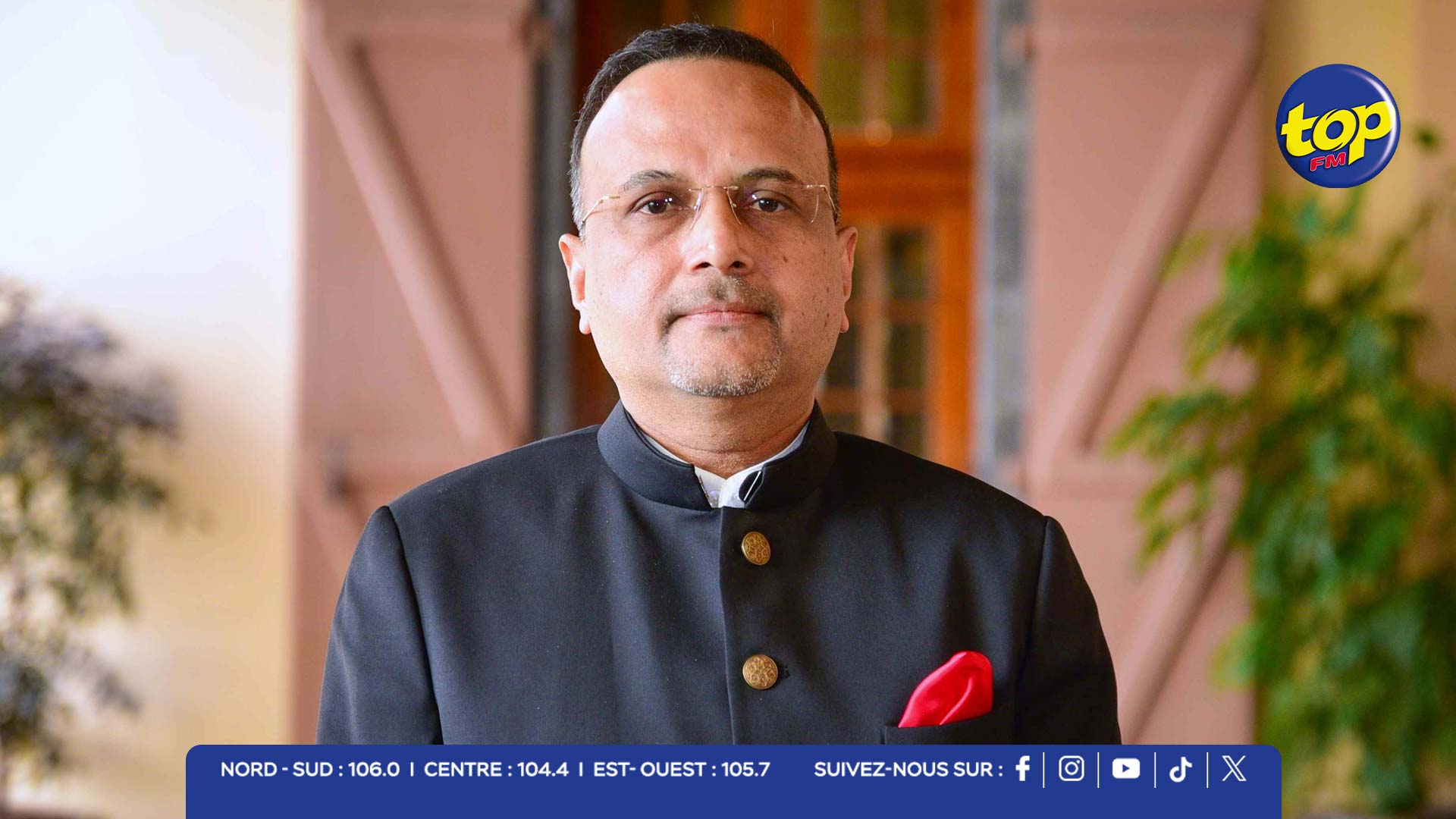
H.E. Mr. Anurag Srivastava
High Commissioner of India to Mauritius